Disclosure: PowerWashPal may earn a commission if you sign up through some links on this page, at no extra cost to you. How we make money.
Updated October 2026. This guide is general information, not legal or tax advice. Rules vary by state and city, so confirm requirements locally.
Pressure washing is one of the easiest home service businesses to start. You don’t need a degree or a storefront, the equipment fits on a trailer, and every house, driveway, and storefront in your area gets dirty again every year. IBISWorld estimates the US pressure washing services industry at about $1.2 billion in 2026 across roughly 32,000 businesses, with the number of companies growing faster than revenue, so standing out matters.
Here’s how to start a pressure washing business in 10 steps, with real cost ranges and the mistakes that sink new owners.
How to start a pressure washing business: quick steps
- Pick your services and target customers
- Estimate your startup costs
- Choose a business structure and register
- Get licenses and check wastewater rules
- Get insured
- Buy the right equipment
- Learn safe technique
- Set your prices
- Set up software for quotes, scheduling, and payments
- Win your first 20 customers
1. Pick your services and target customers
Start with services that are easy to learn and in steady demand:
- Driveways, sidewalks, and patios (pressure washing with a surface cleaner)
- House washing (soft washing siding at low pressure)
- Decks and fences
Add roof soft washing, gutter brightening, and commercial flatwork once you’re confident. Learn the difference between the two core methods in our soft washing vs pressure washing guide. Residential customers are easier to win first. Commercial accounts (storefronts, restaurants, HOAs, property managers) bring recurring income later.
2. Estimate your startup costs
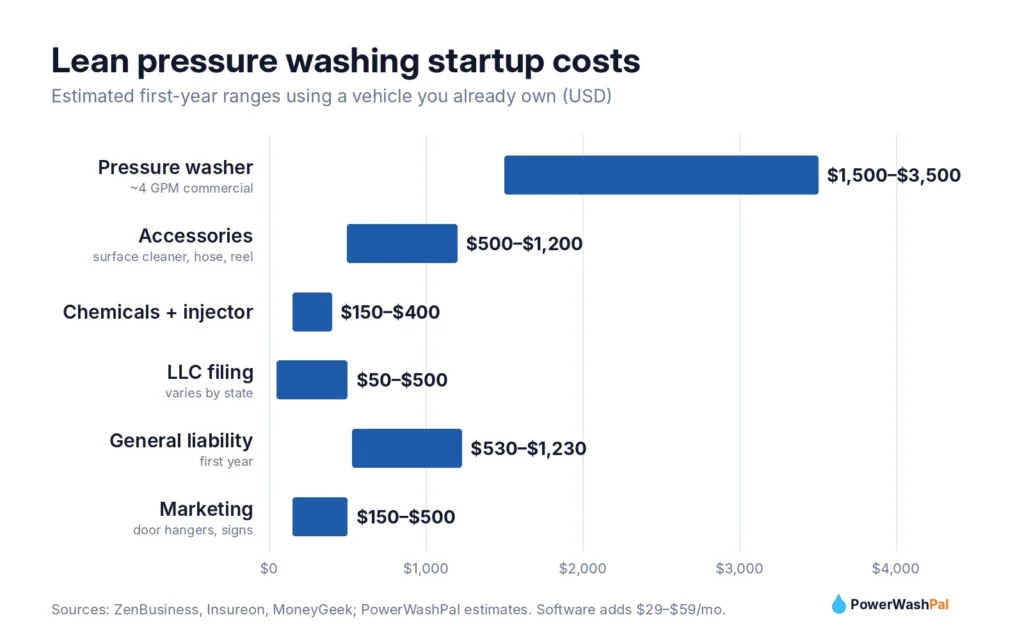
Costs swing widely depending on whether you buy a trailer rig on day one. ZenBusiness puts the full range at about $6,000 to $50,000+. A lean start using a vehicle you already own looks more like this:
| Item | Lean start | Notes |
|---|---|---|
| Commercial pressure washer (about 4 GPM) | $1,500–$3,500 | Commercial units can run $3,000–$15,000+ |
| Surface cleaner, hose, reel, nozzles, gun | $500–$1,200 | See our equipment list |
| Chemicals and soft wash injector | $150–$400 | Start with a downstream injector |
| LLC formation | $50–$500 | Varies by state |
| General liability insurance (first year) | $530–$1,230 | See step 5 |
| Business software | $29–$59/month | Free trials available |
| Marketing (door hangers, yard signs, Google profile) | $150–$500 | Google Business Profile is free |
| Estimated total | about $3,000–$7,000 | Our estimate for a lean start |
A trailer setup adds about $5,000, and a custom van $30,000 or more (ZenBusiness).
3. Choose a business structure and register
- Sole proprietorship is simplest, but your personal assets aren’t separated from the business.
- An LLC is the most common choice for washing businesses because it separates business and personal liability. Filing fees are typically $50–$500 depending on your state. The SBA’s business structure guide compares the options.
- Get an EIN. It’s free from the IRS, and you can apply online in minutes.
- Open a business bank account to keep income and expenses clean for taxes.
4. Get licenses and check wastewater rules
Most states don’t have a dedicated pressure washing license, but you’ll usually need a city or county business license, and some places have specific rules. For example, Fort Worth, Texas requires a mobile power washer permit and bans wash water from entering storm drains, with fines up to $2,000 per violation. If you add painting, sealing, or restoration work, contractor licensing rules can apply, so check with your state licensing board.
Wastewater matters. Under local stormwater programs tied to the Clean Water Act, most cities prohibit dirty wash water from entering storm drains. Common requirements on commercial jobs include blocking drains, recovering water with a vacuum, and filtering it. Cities like Brookhaven, Georgia publish pressure washing guidance worth reading even if you work elsewhere.
5. Get insured
One cracked window or a slip on a wet driveway can cost more than a season’s profit. Typical costs for pressure washing businesses:
| Coverage | Typical cost | When you need it |
|---|---|---|
| General liability | About $44–$103/month (median about $73) | Before your first job |
| Business owner’s policy (BOP) | Median about $142/month | Liability plus property in one policy |
| Inland marine (tools and equipment) | About $31/month | To cover your machine and trailer |
| Commercial auto | About $98–$324/month | If your vehicle is used for work |
| Workers’ comp | About $55–$247/month per employee | Usually required once you hire |
Sources: Insureon, MoneyGeek. Commercial clients will often ask for a certificate of insurance before you start.
6. Buy the right equipment
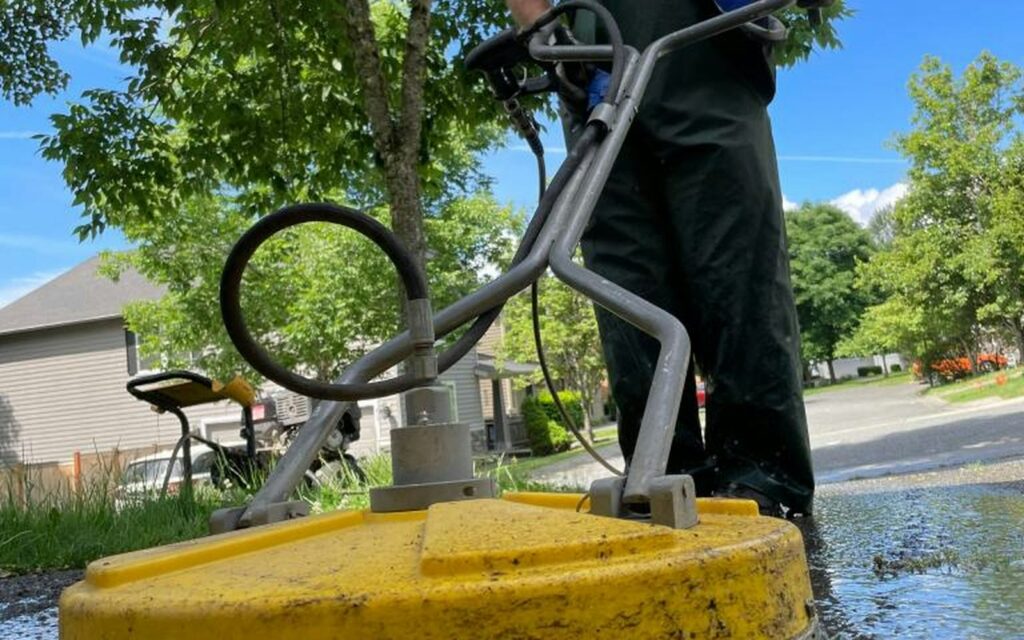
Buy for GPM (flow), not just PSI. A commercial machine around 4 GPM with a triplex pump will clean driveways far faster than a homeowner unit. Pair it with a 20-inch surface cleaner, 100+ feet of non-marking hose, a quality gun and nozzle set, and safety gear. Our full pressure washing equipment list covers what to buy first and what can wait.
7. Learn safe technique
Most damage claims come from using too much pressure on the wrong surface: etched concrete, gouged wood, water forced behind vinyl siding, or shingles stripped of granules. Practice on your own property first, and never pressure wash asphalt shingles. The Power Washers of North America (PWNA) offers certificate courses in house washing, roof cleaning, flatwork, and environmental compliance, which also help you win commercial work.
8. Set your prices
Typical US rates run about $0.20–$0.40 per square foot for concrete, $0.10–$0.50 for house washing, and $100–$250 minimum per visit. Price from your own costs with this formula: price = break-even cost ÷ (1 − target margin), aiming for a 20–40% margin. Our 2026 pressure washing price guide has rates by surface, job, and city.
9. Set up software for quotes, scheduling, and payments
The fastest-growing new washing businesses look professional from day one: branded quotes sent within the hour, automatic reminders, and online payments. Field service software handles all of that for less than one driveway a month.
- Jobber is our top pick for new owners. Core starts at $29/month (annual) for one user and includes quotes, scheduling, invoicing, online payments, and a customer portal. On Grow, quotes can include optional add-ons like “house wash” or “gutter brightening,” which Jobber says lifts the average pressure washing quote by over $300. Read our Jobber review.
- Housecall Pro is the better value once you add a crew in the US: five users for $149/month (annual), with automatic review requests on every plan to build your Google rating fast.
Compare both in our Jobber vs Housecall Pro guide or see all the best pressure washing software.
Try Jobber free for 14 days Try Housecall Pro free
10. Win your first 20 customers
- Google Business Profile. Free, and it’s where most local customers find you. Add real before-and-after photos and ask every customer for a review.
- Neighborhood marketing. After each job, drop door hangers on the five houses on either side and put a yard sign out (with permission).
- Nextdoor and local Facebook groups. Before-and-after posts perform well, especially driveways.
- Bundles. Offer a driveway plus house wash package to raise your average ticket.
- Partners. Realtors, property managers, HOAs, and painters all need reliable washing.
- Referral rewards. A $25 credit for every referred customer is cheap marketing.
Common mistakes to avoid
- Underpricing to win jobs, then burning out. Set a minimum charge and stick to it.
- Skipping insurance because “it’s just a driveway.”
- Buying a homeowner machine that dies mid-season.
- Letting quotes go cold. Follow up within 48 hours, or let software do it automatically.
- Ignoring runoff rules on commercial jobs.
Frequently asked questions
How much does it cost to start a pressure washing business?
A lean start with a vehicle you already own typically costs about $3,000–$7,000 for equipment, insurance, registration, and basic marketing. Full trailer or van setups can run $10,000–$50,000+.
Do you need a license to start a pressure washing business?
Most states don’t have a specific pressure washing license, but you’ll usually need a local business license, and some cities require permits or wastewater controls. Check your city, county, and state rules.
Is a pressure washing business profitable?
It can be. Typical rates of $50–$150 per hour and job minimums of $100–$250 leave healthy margins once you control chemical, fuel, and drive-time costs and build recurring customers.
What software do pressure washing businesses use?
Jobber and Housecall Pro are the most popular all-in-one options for quoting, scheduling, invoicing, and payments. See our best pressure washing software roundup.
How do I get pressure washing customers fast?
Set up a Google Business Profile, post before-and-after photos in local groups, door-hang the neighborhoods around every job, and ask every happy customer for a review and a referral.