Disclosure: PowerWashPal may earn a commission if you buy through some links on this page, at no extra cost to you. As an Amazon Associate we earn from qualifying purchases. How we make money.
Updated October 24, 2026. Specs come from manufacturer and retailer listings, checked this month. We compare equipment through research, not hands-on testing. Here’s how we compare products.
The best soft wash system for your business depends on one question: are you washing houses, or are you cleaning roofs too? A soft wash system mixes cleaning solution and sprays it at low pressure, so the chemical does the work instead of high-pressure water. A house-wash setup can start with a cheap downstream injector. A roof soft wash system needs a dedicated pump with enough flow to reach the roof from the ground.
This guide breaks down the four types of soft wash systems, the 12V soft wash pumps contractors actually build around, and what a complete kit costs, so you can buy once instead of twice.
Quick picks
| Best for | Pick | Why |
|---|---|---|
| Roof soft washing on 12V | Remco Fatboy 7.0 GPM demand pump | 7 GPM flow, Viton construction, demand or bypass mode |
| Bleach-rated 12V pump | Remco 5900 Series Smooth-Flo Bleach Pump | Built for bleach, 7 GPM at up to 100 PSI |
| House washing | NorthStar 5.5 GPM soft wash pump | Made for bleach and disinfectant, enough flow for siding |
| Budget 12V build | Everflo EF7000 7.0 GPM pump | Low price, 7 GPM, huge review base (check chemical ratings) |
| Cheapest way to start | Downstream injector on your pressure washer | Lowest-cost add-on, fine for house washes |
| High-volume roofs and commercial | Gas-powered diaphragm skid (10–12 GPM) | Most reach and volume, sold through equipment dealers |
Soft wash pumps compared
| Pump | Flow | Pressure | Best for |
|---|---|---|---|
| Remco Fatboy 7.0 GPM | 7 GPM | — | Roof soft washing on 12V |
| Remco 5900 Smooth-Flo Bleach Pump | 7 GPM | up to 100 PSI | Bleach-rated daily use |
| NorthStar 5.5 GPM | 5.5 GPM | — | House washing |
| Everflo EF7000 | 7 GPM | 60 PSI | Budget 12V build |
| Shurflo 2088 | 3 GPM | 45 PSI | Spot work only |
| Gas skid (BE SW1165) | 11 GPM | 300 PSI | High-volume roofs and commercial |
Prices change often — click through to Amazon or the dealer for the current price.
What a soft wash system is (and what’s in one)
Every soft wash system does the same job: it gets a measured mix of sodium hypochlorite (SH), surfactant and water onto a surface at low pressure, then lets it dwell and kill the mold, algae and mildew. A complete setup usually has six parts:
- Chemical tanks: one for SH and water or a premix, sometimes a separate surfactant tank.
- Pump: a 12V, 24V or gas-powered diaphragm pump. Pressure washers are not soft wash pumps, so most systems keep the two separate.
- Mixing method: a premixed batch tank, a proportioner that meters chemical into the line, or a downstream injector.
- Hose and reel: usually 1/2-inch hose, often 200 feet on a reel.
- Gun and nozzles: a chemical-rated gun with nozzles sized to the pump’s flow.
- Power: a deep-cycle battery and charger for 12V systems, or a small engine for gas units.
Material matters more than brand names. Dultmeier, a pump and sprayer distributor, lists polypropylene, Viton, Santoprene and polyethylene as the materials best suited to sodium hypochlorite. Check that the pump housing, valves and seals use them before you buy.
The four types of soft wash systems
1. Downstream injection
A downstream injector pulls chemical into the water line after your pressure washer’s pump, so bleach never touches the pump. It’s the cheapest way to start soft washing and works well for vinyl and metal siding. The catch is dilution: forum contractors note downstream injection can’t reach the stronger mixes roofs need, and reach depends on the nozzle you use.
Check price on Amazon (General Pump downstream injector)
2. X-Jet and M5-style nozzles
An X-Jet or M5-style nozzle siphons chemical at the gun instead of the pump, from a bucket on the ground. Contractors use them to deliver stronger mixes than a standard downstream injector, and they can shoot higher. The trade-off is dragging a bucket and a second hose around the job.
Check price on Amazon (M5-style twist nozzle, 3–7 GPM)
3. 12V pump systems
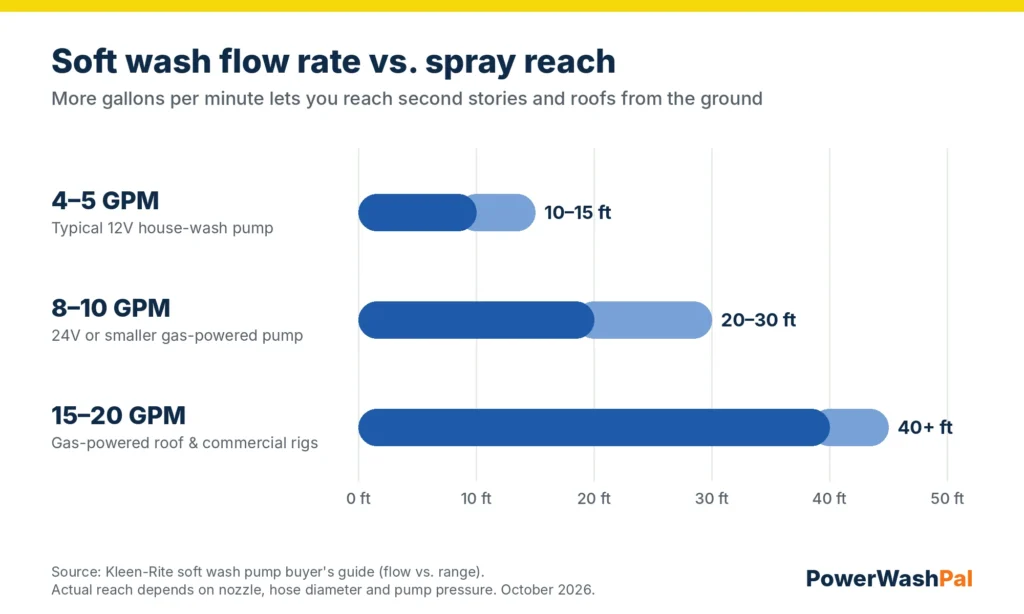
A 12V soft wash system is the most common dedicated setup for small companies. It’s a demand pump that runs only when you pull the trigger, powered by a deep-cycle battery. Dultmeier puts 12V pumps at about 7 GPM maximum flow, and says 5 GPM, 100 PSI pumps can reach 30 feet or more with the right nozzle and gun. They’re quiet, cheap to replace and need no oil or fuel. The downside is a shorter life than gas pumps, especially if a pressure switch keeps cycling.
4. Gas-powered diaphragm systems
Gas soft wash systems use a small engine, often a Honda GX200, to drive a diaphragm pump. Kleen-Rite lists BE Pressure soft wash units with Comet or CP diaphragm pumps at 11 GPM and 300 PSI. Dultmeier says gas systems can reach well past 50 feet with the right gun and nozzle. They’re the choice for big roofs, commercial buildings and crews with more than one sprayer, but they’re louder, cost more and need oil changes and diaphragm service.
How we chose these soft wash pumps
We didn’t test these pumps ourselves. We compared published specs (flow, pressure, materials, operating mode), distributor buying guides from Kleen-Rite and Dultmeier, Sprayer Depot’s pump notes, and what working contractors report on PressureWashingResource. We only list Amazon products with clear model numbers from established pump makers, and we skip unbranded pumps.
The best soft wash pumps and systems
Remco Fatboy 7.0 GPM 12V demand pump: best 12V pump for roofs
The Remco Fatboy (model 5538-1E1-94A) is a five-chamber diaphragm pump with Viton parts, rated at 7 GPM. It’s self-priming, can run dry and works in demand or bypass mode. That flow is about the most you’ll get from a 12V pump, which is what you want for second stories and low-pitch roofs.
- Good for: roof and house soft washing from one 12V rig.
- Watch out for: higher-flow 12V pumps draw more amps, so size your battery and wiring for it.
Remco 5900 Series Smooth-Flo Bleach Pump: best bleach-rated pump
Remco’s 5900 Series (model 5918-9I1-94A) is listed specifically as a bleach pump, rated at 7.0 GPM and up to 100 PSI with 1/2-inch ports. If you’ll run SH every day, a pump built for it is worth the extra cost. It’s a newer listing on Amazon with few reviews so far.
- Good for: owners who want a pump designed around bleach from the start.
- Watch out for: limited Amazon review history.
NorthStar 5.5 GPM soft wash pump: best for house washing
NorthStar sells this pump for soft washing and disinfecting with bleach-based solutions. At 5.5 GPM it sits right in the range most house washes need, and NorthStar is a brand many contractors already know from their pressure washers.
- Good for: one- and two-story house washes.
- Watch out for: less flow than 7 GPM pumps for roof work.
Everflo EF7000 7.0 GPM pump: best budget 12V build
The Everflo EF7000 is a 12V diaphragm pump rated at 7.0 GPM and 60 PSI, self-priming up to 12 feet, with polypropylene construction and hundreds of Amazon reviews. It’s marketed for agricultural chemicals, so confirm the seals suit sodium hypochlorite before you commit it to bleach work, and keep a spare on the truck.
- Good for: a low-cost first 12V system or a backup pump.
- Watch out for: not sold as a bleach-specific pump; lower pressure rating.
Shurflo 2088: for spot work, not full houses
The Shurflo 2088 (model 2088-343-435) is a reliable 12V pump, but at 3 GPM and 45 PSI it’s better for small spray rigs, spot treatments and window-cleaning carts than for whole houses or roofs.
Gas-powered skids: best for high-volume roofs and commercial work
For big roofs and commercial buildings, look at gas diaphragm units like BE Pressure’s SW1165 series (Honda GX200 engine, Comet or CP diaphragm pump, 11 GPM at 300 PSI per Kleen-Rite). These are sold through pressure washing equipment dealers rather than Amazon, and most dealers will also build a full skid with tanks and reels.
What a complete soft wash kit costs
If you’d rather buy a finished 12V system, prices give you a sense of the jump from parts to turnkey. In October 2026, CleanFreak listed a Remco 7 GPM, 100 PSI soft wash skid plate (pump, accumulator, switch and aluminum plate) at $1,495 and its complete system with a cage, proportioner, 200 feet of 1/2-inch hose on a stainless reel, a wand with four nozzles and a battery charger at $3,395. A battery wasn’t included.
How to build a 12V roof soft wash system
- Pump: a 7 GPM 12V diaphragm pump with bleach-compatible materials.
- Battery: a deep-cycle marine battery (CleanFreak specifies a Group 24) plus a smart charger.
- Tank: a polyethylene tank sized to your typical job, or two tanks if you keep SH and surfactant separate.
- Mixing: premix in the tank for simplicity, or add a proportioner with metering valves to change ratios between jobs.
- Hose and reel: 1/2-inch soft wash hose, usually 200 feet, on a reel. A hose reel saves time on every job.
- Gun and nozzles: a chemical-rated gun and nozzles matched to your pump’s GPM.
- Skid or frame: bolt it all to a plate or cage so it moves as one unit.
On chemical strength, contractors commonly report needing a much stronger SH mix on roofs than on siding. Always follow the chemical label and safety data sheet, wear eye and skin protection, and pre-wet plants. The Asphalt Roofing Manufacturers Association advises against power washing asphalt shingles, which is why roofs are soft washed. Our soft washing vs pressure washing guide covers when to use each method.
12V vs gas soft wash system
| 12V system | Gas system | |
|---|---|---|
| Typical flow | 5–7 GPM | 10–12 GPM |
| Reach | About 30 ft with the right nozzle | 50 ft or more |
| Noise | Quiet | Loud |
| Upkeep | Charge the battery; replace pump when worn | Oil, fuel, diaphragm service |
| Up-front cost | Lower | Much higher |
| Best for | House washes, small roofs, solo operators | Big roofs, commercial, multi-sprayer crews |
One more thing to weigh: Kleen-Rite notes California was the first state to move against small gas engines, and others may follow. If you work in a noise-sensitive or regulated area, a 12V or 24V system is the safer long-term bet.
Pricing soft wash jobs once you’re set up
Roof soft washing typically runs $0.30–$1.00 per square foot, and house washing $0.10–$0.50. Plug your measurements into our free pressure washing estimate calculator to get a quote in seconds, and read how much to charge for pressure washing for the full pricing playbook. When you’re ready to send quotes and schedule jobs from your phone, field service apps like Jobber handle quoting, scheduling and invoicing in one place.
Related guides
- Best surface cleaner for pressure washing pros
- Best commercial pressure washer
- Roof cleaning cost (and how much to charge)
- Best pressure washer hose reel
- Soft washing vs pressure washing
- Pressure washing equipment list
- Pressure washing estimate calculator
- How to start a pressure washing business
- Best pressure washing software
- Soft wash chemicals and mix ratios
- Best Soft Wash Pump: 12V vs 24V vs Gas
Fitting a soft wash system onto a trailer? Our pressure washer trailer setup guide covers layout, weight balance and plumbing.
Frequently asked questions
What is the best soft wash system for a beginner?
If you already own a pressure washer, start with a downstream injector or an M5-style nozzle for house washes. Once you add roof cleaning, move to a 12V pump system with a 5–7 GPM bleach-compatible pump.
What GPM do I need for a roof soft wash system?
Kleen-Rite recommends 8–10 GPM for best results, which usually means a 24V or gas pump. Many owner-operators still clean one-story and low roofs with 7 GPM 12V pumps by matching the nozzle to the pump.
Can I use a pressure washer for soft washing?
Yes, with a downstream injector or X-Jet-style nozzle, which keep bleach out of the pump. It works for siding, but it can’t deliver the stronger mixes many contractors use on roofs.
How much does a soft wash system cost?
A downstream injector is the cheapest option. For dedicated systems, CleanFreak listed a Remco 12V skid plate at $1,495 and a complete 12V system at $3,395 in October 2026. Building your own from parts usually costs less, and gas-powered skids cost more.
What pump material works with bleach?
Look for polypropylene housings and Viton or Santoprene seals and diaphragms. Distributors list these as the best materials for sodium hypochlorite.
What is a gas soft wash system?
A gas soft wash system uses an engine-driven pump instead of a 12V electric one. Distributor figures put 12V pumps at roughly 5 to 7 GPM at most and gas diaphragm pumps at 10 to 12 GPM, so gas makes sense when you need more flow and reach for two-story houses and roofs. The gas BE SW1165 is sold through dealers.
What tank and pump do I need for a soft wash system?
A basic soft wash tank and pump setup pairs a polyethylene chemical tank sized to your typical job (or two tanks if you keep SH and surfactant separate) with a pump built for bleach: a polypropylene housing with Viton or Santoprene seals and diaphragms. Many owner-operators run 7 GPM 12V pumps on one-story and low roofs, while Kleen-Rite recommends 8–10 GPM (usually a 24V or gas pump) for best results.
Should I choose 12V or 24V?
12V pumps top out around 7 GPM. Kleen-Rite recommends 8–10 GPM for best roof results, which usually means a 24V or gas pump. If you mostly wash houses and low roofs, a 7 GPM 12V pump with the right nozzle is enough; for tall roofs and volume, step up.
Can a 12V system reach a second-story roof?
A 5 GPM, 100 PSI pump can reach 30 feet or more with the right nozzle and gun. Gas systems reach well past 50 feet. Match the nozzle to your pump’s flow.
Do I need a proportioner, or is premixing enough?
Premixing in the tank is simplest. A proportioner with metering valves lets you change ratios between jobs without re-mixing. Start premixed, and add a proportioner when you regularly run multiple mixes.
How long will a 12V pump last on bleach?
Shorter than a gas pump, especially if the pressure switch keeps cycling. Keep a spare on the truck, and make sure seals and diaphragms are Viton or Santoprene.