Disclosure: PowerWashPal may earn a commission if you buy through links on this page, at no extra cost to you. We don’t sell insurance and this isn’t legal or insurance advice. Read how we make money.
Updated October 2026.
Pressure washing looks low-risk until it isn’t. A 3,000 PSI wand can strip paint off a vintage car, blow out a window seal or etch a brand-new stamped patio. Soft wash chemicals can kill a homeowner’s prize hydrangeas. And a slip on a wet roof can end a season. Insurance is what turns those bad days into an annoying phone call instead of the end of your business.
Whether you call it pressure washer insurance or a commercial policy for your pressure washing company, the coverage works the same way. Here’s what pressure washing business insurance actually costs in 2026, which policies you need at each stage, and the few questions to ask before you buy.
How much does pressure washing insurance cost?
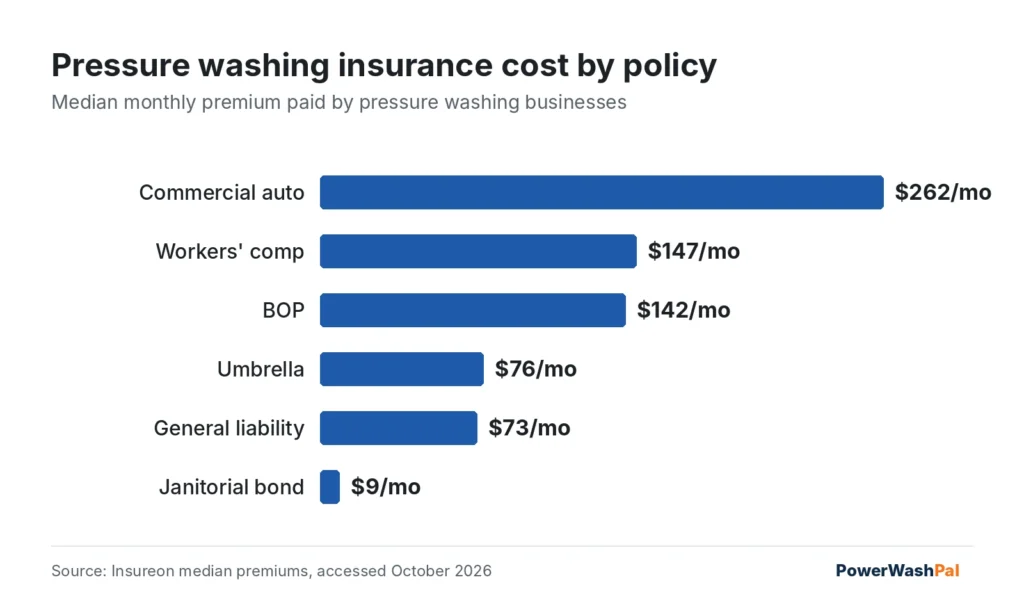
According to Insureon, which reports median premiums from pressure washing businesses that applied for quotes through its platform, general liability insurance runs about $73 a month ($879 a year). That’s for a standard policy with $1 million per occurrence and $2 million aggregate limits and a $500 deductible.
| Policy | Median monthly | Median yearly | Who needs it |
|---|---|---|---|
| General liability | $73 | $879 | Everyone, from day one |
| Business owner’s policy (BOP) | $142 | $1,699 | Owners with a shop, storage or pricey gear |
| Commercial auto | $262 | $3,143 | Any truck or van titled to the business |
| Workers’ compensation | $147 | $1,761 | As soon as you hire (required in most states) |
| Commercial umbrella | $76 | $906 | Commercial contracts that require higher limits |
| Janitorial bond | $9 | $112 | Crews working inside or around customers’ property unsupervised |
A separate 2026 study from MoneyGeek, based on modeled quotes, found general liability for pressure washers ranges from roughly $39 to $103 a month depending on the state. Location, payroll, claims history and whether you do commercial or roof work all move the number.
Insurance for a pressure washing business: the policies, in plain English
General liability: the one you can’t skip
General liability pays when you damage a customer’s property or someone gets hurt because of your work. Think: you lift a shingle with too much pressure and it leaks, or a neighbor slips on your hose line. Most HOAs, property managers and commercial clients will ask for a certificate of insurance (COI) before you set foot on site, so you’ll want this before your first paid job.
Ask about this: some general liability policies exclude damage from chemicals or “pollution.” If you soft wash with sodium hypochlorite, ask the agent directly whether plant and paint damage from runoff is covered, or whether you need contractors’ pollution liability.
Business owner’s policy (BOP)
A BOP bundles general liability with commercial property coverage, usually at a better price than buying them separately. It makes sense once you have a garage, storage unit or shop full of equipment.
Inland marine (tools and equipment)
A skid unit, hot water machine and surface cleaner can easily top $10,000, and a standard property policy may not cover gear while it’s on your trailer or at a job site. Inland marine coverage follows the equipment. If you’ve built a rig like the one in our pressure washing equipment list, price this out.
Commercial auto
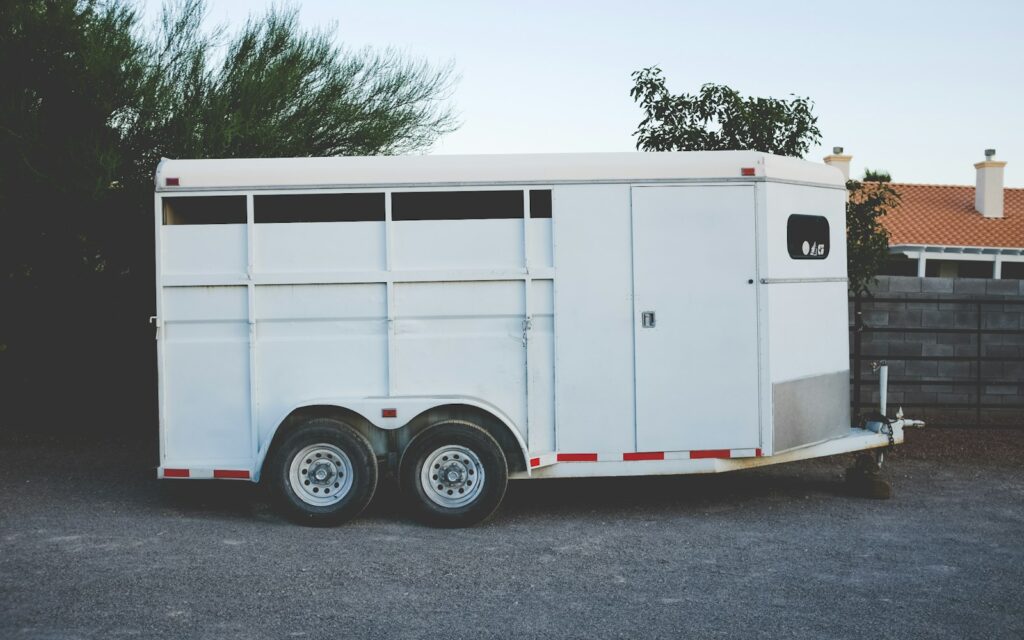
Your personal auto policy may deny a claim if the truck was being used for business, especially while towing a trailer full of water and chemicals. Commercial auto is the most expensive line for most washers, but it’s also the one that protects you from the biggest losses.
Workers’ compensation
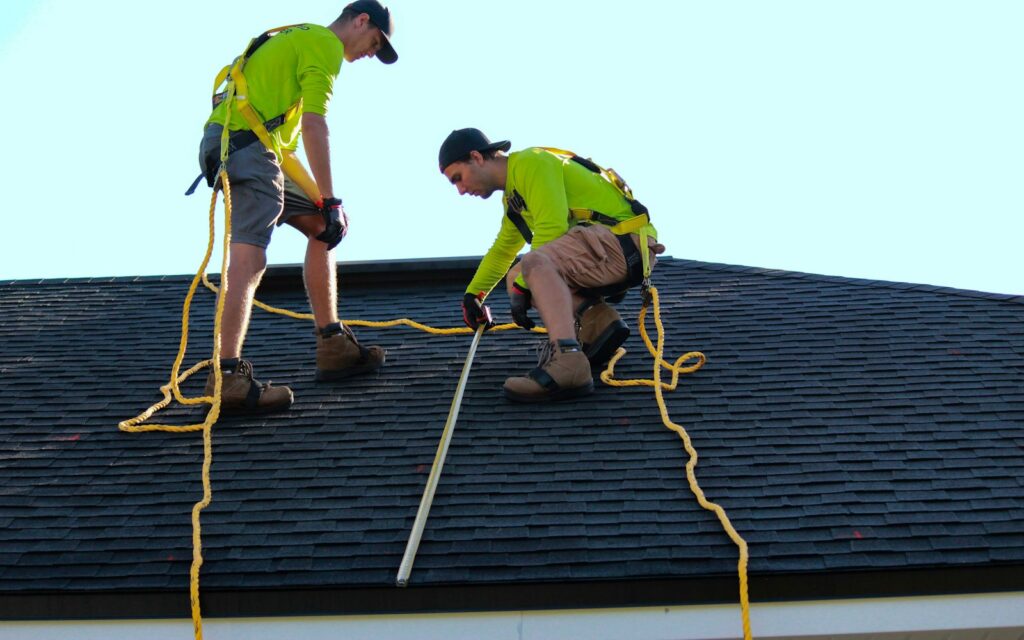
Once you hire your first helper, most states require workers’ comp. Wet roofs, ladders and slick concrete make injuries common in this trade. Rules vary by state, so check with your state’s labor department.
Umbrella
An umbrella adds an extra $1 million (or more) on top of your liability and auto policies. You’ll usually only need it when a commercial client’s contract asks for higher limits.
What to budget as you grow
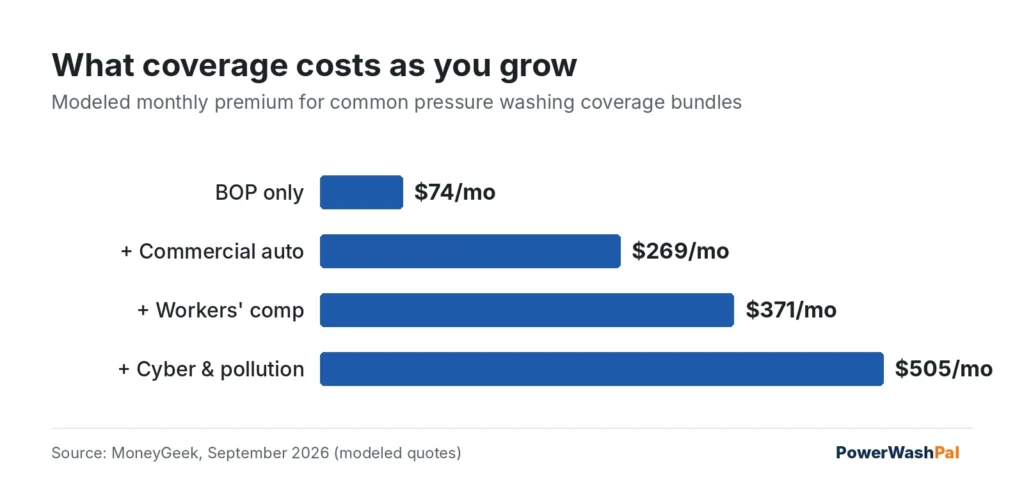
- Solo, using a personal truck: general liability (around $73/mo median) plus a business-use endorsement on your auto policy.
- Solo, business truck and trailer: BOP or GL, commercial auto and inland marine. MoneyGeek’s modeled bundle is about $269 a month.
- Small crew: add workers’ comp. MoneyGeek’s modeled bundle is about $371 a month.
- Commercial accounts: add pollution liability, cyber (if you store customer card data) and an umbrella. Around $505 a month in MoneyGeek’s model.
Build insurance into your prices. If you’re spending $3,000 a year on coverage and doing 300 jobs, that’s $10 a job. Our pressure washing pricing guide shows how to fold overhead like this into your minimum charge.
How to lower your premium
- Bundle into a BOP instead of buying general liability and property separately.
- Pick a higher deductible if you can cover small claims yourself.
- Pay annually. Many carriers charge installment fees on monthly payments.
- Document every job. Before-and-after photos and signed work orders help you fight bogus claims, which keeps your claims history clean. Field service apps like Housecall Pro and Jobber attach photos to each job automatically.
- Get three quotes. Compare an online marketplace with a local independent agent who writes contractor policies.
Questions to ask before you buy
- Is chemical runoff or overspray (plants, paint, cars) covered, or excluded as pollution?
- Is roof work excluded, or does it raise the premium?
- Are my tools covered on the trailer and at job sites?
- How fast can you issue a certificate of insurance, and can I add a client as “additional insured” myself?
- Does my policy cover subcontractors, or do they need their own?
Just getting set up? Insurance is one of the first things we cover in our guide on how to start a pressure washing business.
FAQ
Do I need insurance to start a pressure washing business?
Legal requirements depend on your state and city, but most clients, HOAs and property managers will ask for proof of it, and one damage claim can cost far more than a year of premiums. Treat it as required.
How much is general liability insurance for pressure washing?
About $73 a month ($879 a year) at the median, according to Insureon, for $1 million/$2 million limits. MoneyGeek’s 2026 study puts the state-by-state range at roughly $39 to $103 a month.
Does general liability cover damage from soft wash chemicals?
Not always. Some policies exclude pollution-related damage. Ask your agent, and consider contractors’ pollution liability if you soft wash.
Do I need workers’ comp if I’m the only employee?
In most states, sole proprietors aren’t required to cover themselves, but rules vary. You’ll almost always need it once you hire.
Does my personal auto insurance cover my work truck?
Often not for business use. Talk to your carrier about a business-use endorsement or a commercial auto policy.
Sources: Insureon, pressure washing insurance cost (accessed October 2026); MoneyGeek, pressure washing business insurance cost (September 2026). Figures are estimates and medians, not quotes. Requirements vary by state; this article isn’t legal or insurance advice.